

RDM
About Project
Discover

INTRODUCTION AND DATA SUMMARY
The Data Management Plan (DMP) for the CulTech project is essential to ensure that all data generated through the activities undertaken in the project is effectively managed, protected and accessible during and after the project’s completion. The DMP will contribute to increasing transparency and assuring access to information, thereby facilitating the dissemination of knowledge and information for further research and education.
In accordance with the stated objectives, apart from preserving and promoting cultural artifacts and traditions through digitization efforts (by creating digital representations of tangible and intangible cultural heritage assets), CulTech seeks to enhance access, understanding, and appreciation of diverse cultural heritage assets.
Effective data management practices are essential for achieving the objectives and for ensuring the integrity, accessibility, and usability of the digitized cultural heritage data, thereby maximizing the impact of the project outcomes.
This data management plan provides a framework for how data will be collected, processed, stored, shared, and utilized throughout the project. It outlines the strategies, protocols, and considerations necessary to support the successful execution of the project and the achievement of its goals.
The plan is structured to address specific aspects of data management, including data collection, processing and analysis, storage and security, sharing and accessibility, preservation and long-term access, stakeholder engagement and collaboration, compliance and ethics, as well as training and capacity building.
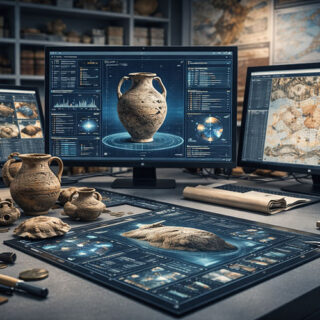
The project will involve the collection of various types of data, including high-resolution images, 3D scans, descriptive metadata, videos, and audio recordings. These data types will collectively provide comprehensive digital representations of tangible and intangible cultural heritage artifacts and traditions.
Data will be sourced from physical artifacts, archival materials, cultural heritage sites, and relevant stakeholders, including cultural institutions, communities, and experts.
The resulting data will be obtained by employing specialized equipment and techniques tailored to each asset that will be digitized. This may include high-quality cameras for image capture, 3D scanners (employing various technologies – laser, structured light, CT, etc.) for digitizing artifacts, audio recorders for capturing oral histories, and video cameras for documenting cultural practices and events.
Finally, it should be noted that ethical considerations will be paramount throughout the data collection process. Informed consent will be obtained from participants involved in interviews, recordings, or other forms of data collection. Measures will be taken to ensure the privacy and confidentiality of sensitive information, and cultural sensitivities will be respected in all aspects of data collection. Acording to Science Europe’s Practical Guide to the International Alignment of Research Data Management a DMP must contain the folowing information:
1.Data description and collection or re-use of existing data
Within the project, there will be generated or collected high-resolution images, 3D scans, descriptive metadata, videos, audio recordings etc. All data will be saved in the native format of the collection solutions and at least in a standard portable cross platform format to ensure long-term compatibility and accessibility.
2. Documentation and data quality
Within the project, a robust transdisciplinary metadata collection system will be implemented to describe and catalog each digitized element, thus facilitating the cataloging and archiving of DTs. All data collection activities will be carried out in compliance with international standards for digitization processes, ensuring data quality and consistency.
3. Storage and backup during the research process
To ensure the safety and accessibility of the data, the cloud platform of CO UTCN and P3USMS will be used, the data will be stored in the two cloud solutions with mirror backup. The backup solution will be configured so that the data is automatically copied to both clouds, either by a direct backup from the original source to both platforms, or by replicating the data from one cloud to another. There will be defined rules and restrictions on data access rights, considering copyright and other legal aspects. Data will be encrypted both in transit and at rest on both platforms to prevent unauthorized access and ensure privacy.
4. Legal and ethical requirements, codes of conduct
No sensitive personal data will be collected within the project. In the case of evaluation questionnaires, the data that will be collected will be the contact data and those only if the respondents want to do so. Personal data will be used strictly within the project and only for the purpose for which they were collected and in compliance with the GDPR rules in force.
In Romania, copyright legislation is mainly regulated by Law no. 8/1996 on copyright and related rights, updated and amended several times to align with European Union directives and international standards. Law no. 8/1996 establishes that the author of a work has exclusive rights over its use, including the right to authorize or prohibit: reproduction of the work, distribution of the work and public communication, including making the work available on the Internet. European copyright legislation will be respected: Copyright Directive in the Digital Single Market – Directive (EU) 2019/790; Database Directive – Directive 96/9/EC, Directive on the reuse of public sector information Directive (EU) 2019/1024, General Data Protection Regulation (GDPR) and the Directive on the terms of protection of copyright and related rights – Directive 2006/116/EC. Adherence to these directives and regulations is essential to ensure that the sharing of cultural data is done legally and ethically, both protecting copyright and promoting open access to CH. In the studies developed within the project, heritage assets from the inventory of the 3 partner museums in the project will be used, so that by using Creative Commons licenses, the results will be accessible to the general public without violating national and European copyright protection regulations. In the case of orphan works, Directive 2012/28/EU will be respected which harmonizes the treatment of orphan works throughout the European Union, ensuring that they can be used and accessed legally, especially for preservation, research and education purposes. An ethics committee will be formed at the level of the research center that will ethically supervise all research activities. It will include experienced researchers, a lawyer and at least a specialist in intellectual property rights. From the point of view of the project it is vital that the digitization preserves the original meaning and significance of the cultural objects, respecting their context and provenance. Copyright, data protection and confidentiality will be respected. We aim to be transparent and responsible in our research efforts and to comply with all applicable norms of ethical conduct. Any decision of the ethics council of the center will be immediately implemented by the director of the center and the Steering Committee.
5. Data sharing and long-term preservation
The data collected within the project will be made public through the project website and the databases hosted on it. At the moment, we do not expect there to be any restrictions regarding the sharing of data that will be done using Creative Commons licenses. All valid data collected within the project will be stored long-term. Storage will be done in databases dedicated to each type of data. The databases will be stored on virtual servers created in the Cloud at UTCN and USMS. Access to the data will be done directly from the browser, in order to be processed the data sets will have to be downloaded and processed locally with specific software for processing images or 3D models. A centralized DOI registration and management system will be implemented at the center level. This system will be integrated with the data storage and archiving databases used in the project so that each new dataset created or each digitized object automatically receives a unique DOI upon upload or digitization completion. Each set of data will be identifiable and traceable through associated unique IDs.
6. Data management responsibilities and resources
Data management will be managed at the Steering Committee level. To ensure efficient data management within the center, the allocated resources will include both the specific funding and the time dedicated to the activities necessary for the data to comply with the FAIR (Findable, Accessible, Interoperable, Re-usable) principles.
7. FAIR DATA
7.1 MAKING DATA FINDABLE, INCLUDING PROVISIONS FOR METADATA
In adherence to the FAIR principles (Findable, Accessible, Interoperable, Reusable), ensuring that data collected and generated within the project is easily discoverable and accessible is paramount. This involves providing comprehensive metadata, employing standard identification mechanisms, and establishing clear naming conventions and versioning protocols.
Metadata will be meticulously crafted to facilitate the discoverability of data. This metadata will include detailed descriptions of the data, such as titles, descriptions, creators, dates, and keywords, enabling efficient search and retrieval.
For assuring the identifiability and standard identification mechanisms, persistent and unique identifiers, such as Digital Object Identifiers (DOIs), will be employed to ensure the unambiguous identification of datasets. A centralized system will be devised such that DOIs will be automatically assigned to each dataset, providing a stable and citable reference for long-term access.
Consistent and descriptive naming conventions will be utilized for all data files to enhance clarity and organization. This will include incorporating relevant information into file names, such as project identifiers, dates, and brief descriptions.
A systematic approach will be adopted for selecting search keywords, incorporating relevant terms related to the cultural heritage artifacts, traditions, locations, and themes represented in the data. This will enhance the discoverability of data across diverse search queries.
Versioning will be managed transparently to track changes and updates to datasets over time. Clear version numbers and revision histories will be maintained to ensure users can access the most up-to-date versions of the data.
Where applicable, established standards for metadata creation will be followed to ensure consistency and interoperability. This may include discipline-specific standards such as Dublin Core for descriptive metadata, MODS for bibliographic metadata, or CIDOC-CRM for cultural heritage data. In cases where discipline-specific standards are not available, metadata creation will adhere to best practices and guidelines established by relevant authorities and organizations.
7.2 MAKING DATA OPENLY ACCESSIBLE
Ensuring the openness and accessibility of data generated within the project is essential for fostering transparency, collaboration, and reproducibility. This section outlines the specific data that will be made openly available, the methods for accessing the data, and the deposition of data, metadata, documentation, and code.
The project commits to making all non-sensitive data openly available to the extent possible. This includes high-resolution images, 3D scans (in multiple widely-adopted formats), descriptive metadata, videos, audio recordings, and any other non-sensitive data generated during the course of the project. Data that cannot be shared openly due to legal, ethical, or privacy considerations will be clearly identified, with appropriate justifications provided.
Any data kept closed will be accompanied by a clear rationale, separating legal and contractual reasons from voluntary restrictions. Reasons for keeping data closed may include privacy concerns, proprietary information, or cultural sensitivities that cannot be adequately addressed through anonymization or consent procedures.
Openly accessible data will be made available through dedicated repositories or platforms, ensuring long-term preservation and access. Access to the data will be provided through standard methods, such as web-based interfaces, APIs, or downloadable files. Documentation about the software tools needed to access the data will be included, along with relevant instructions and user guides.
The data, metadata, documentation, and code will be deposited in the cloud solutions available at the UTCN and USMS data server repositories, that support open access and long-term preservation.
In cases where data access is restricted due to legal, contractual, or ethical considerations, clear provisions will be made for providing access under specified conditions. Access restrictions will be clearly communicated to users, with mechanisms in place for requesting access and obtaining necessary permissions.
7.3 MAKING DATA INTEROPERABLE
Ensuring the interoperability of data is essential for facilitating data exchange, re-use, and integration across diverse research contexts and stakeholders. This section assesses the interoperability of project data and outlines the strategies and standards used to enhance interoperability.
The project will conduct a thorough assessment of the interoperability of its data to identify potential barriers and opportunities for improvement. This assessment will consider factors such as data formats, vocabularies, metadata standards, and methodologies for data integration.
To facilitate interoperability, the project will adhere to established data and metadata vocabularies, standards, and methodologies. This includes using standard and controlled vocabularies where applicable to ensure consistency and compatibility across data types. Metadata standards such as Dublin Core, MODS, and CIDOC-CRM will be followed to enhance data discoverability and interoperability.
The project recognizes the importance of interdisciplinary interoperability and will strive to use standard vocabularies for all data types present in the dataset. This approach ensures that data from different disciplines can be seamlessly integrated and re-used across research contexts. In cases where standard vocabularies are not feasible or available, mapping to more commonly used ontologies will be provided to facilitate cross-disciplinary interoperability.
Where standard vocabularies are not used for specific data types, the project will provide mapping to more commonly used ontologies to enable interoperability with existing datasets and research resources. This mapping will be documented and made available alongside the data, enhancing the reusability and compatibility of project data with external resources.
By adhering to established vocabularies, standards, and methodologies for data and metadata management, the project aims to enhance the interoperability of its data and foster collaboration, re-use, and innovation within the broader research community.
7.4 INCREASE DATA RE-USE (THROUGH CLARIFYING LICENSES)
This section focuses on maximizing the reusability of project data by specifying licensing terms, data availability, quality assurance processes, and the duration of data reusability.
Project data will be licensed under open licenses that permit the widest possible reuse, adaptation, and redistribution by third parties. Specifically, Creative Commons licenses, such as CC BY (Attribution) or CC BY-SA (Attribution-ShareAlike), will be used to ensure that data users have the freedom to build upon and share the data without restrictive barriers.
The project commits to making data available for reuse as soon as possible following collection, processing, and quality assurance procedures. In cases where a data embargo is necessary, clear justifications will be provided, such as the need to publish findings or seek patents. Embargoes will be kept to the minimum duration required to fulfill these objectives.
All data produced and/or used in the project will be made usable by third parties, both during and after the project’s duration. Any restrictions on data reusability will be clearly communicated, with explanations provided for legal, ethical, or contractual constraints that may limit reuse. Efforts will be made to minimize such restrictions to maximize the accessibility and impact of project data.
Rigorous data quality assurance processes will be implemented to ensure the accuracy, completeness, and reliability of project data. This includes validation checks, error correction procedures, and documentation of data quality metrics. Quality assurance measures will be applied at various stages of the data lifecycle, from collection and processing to analysis and dissemination.
Project data will remain reusable for an indefinite period, ensuring long-term access and availability for future research and innovation. This commitment to ongoing data reusability reflects the project’s dedication to fostering open science practices and maximizing the societal impact of its research outcomes.
8. ALLOCATION OF RESOURCES
This section outlines the allocation of resources for ensuring the FAIRness of project data, including estimating costs, identifying responsibilities for data management, and assessing the costs and potential value of long-term preservation.
The estimated costs for making project data FAIR include expenses related to data curation, metadata creation, repository fees, software tools, and personnel time dedicated to data management activities. These costs will be covered by the project budget.
Clear responsibilities for data management will be assigned within the project team. A designated Data Management Coordinator (elected by the project’s steering committee – composed of the Director and Group Leaders) will oversee data management activities, including data collection, processing, storage, sharing, and documentation. Project partners will be responsible for providing their specific input and for contributing to data management efforts within their respective areas of expertise and ensuring compliance with data management policies and procedures.
Long-term preservation of project data involves costs associated with repository maintenance, data migration, data refreshment, and ongoing access provision. While these costs are essential for ensuring the sustainability and accessibility of project data, they also represent an investment in the potential value of the data for future research, education, and cultural heritage preservation efforts. The project will prioritize budget allocations for long-term preservation activities, recognizing the importance of safeguarding project data for posterity and maximizing its enduring impact.
By addressing the costs of making data FAIR, defining responsibilities for data management, and assessing the costs and potential value of long-term preservation, the project aims to ensure effective resource allocation and sustainable data management practices throughout the project lifecycle.
9. DATA SECURITY
This section addresses data security measures, including data recovery, secure storage, transfer of sensitive data, and considerations for long-term preservation in certified repositories.
Robust data recovery mechanisms will be implemented to mitigate the risk of data loss due to hardware failure, software errors, or other unforeseen events. Regular backups of project data will be conducted and stored in geographically diverse locations to ensure redundancy and resilience.
Project data, particularly sensitive or confidential data, will be stored in secure, encrypted storage systems with restricted access controls. Access to sensitive data will be limited to authorized personnel with appropriate permissions, and data encryption will be applied both at rest and during transfer to safeguard against unauthorized access.
Protocols for the secure transfer of sensitive data will be established to prevent unauthorized interception or disclosure during transit. This may include the use of encrypted communication channels, secure file transfer protocols (e.g., SFTP), or virtual private networks (VPNs) to ensure data confidentiality and integrity during transmission.
Project data intended for long-term preservation and curation will be deposited in certified repositories that adhere to recognized standards for digital preservation. These repositories will provide assurances of data authenticity, integrity, and accessibility over time, ensuring that project data remains available for future research and use.
10. LEGAL AND ETHICAL ASPECTS, CODES OF CONDUCT
No sensitive personal data will be collected within the project. In the case of evaluation questionnaires, the data that will be collected will be limited to contact information and only if the respondents give their consent for this. Personal data will be used strictly within the project and only for the purpose for which they were collected and in compliance with the GDPR guidelines.
In Romania, copyright legislation is mainly regulated by Law no. 8/1996 on copyright and related rights, updated and amended several times to align it with European Union directives and international standards. Law no. 8/1996 establishes that the author of a work has exclusive rights over its use, including the right to authorize or prohibit: reproduction of the work, distribution of the work and public communication, including making the work available on the Internet. European copyright legislation will be respected: Copyright Directive in the Digital Single Market – Directive (EU) 2019/790; Database Directive – Directive 96/9/EC, Directive on the reuse of public sector information Directive (EU) 2019/1024, General Data Protection Regulation (GDPR) and the Directive on the terms of protection of copyright and related rights – Directive 2006/116/EC. Adherence to these directives and regulations is essential to ensure that the sharing of cultural data is done legally and ethically, both protecting copyright and promoting open access to cultural heritage. In the studies developed within the project, heritage assets from the inventory of the 3 partner museums in the project will be used, so that by using Creative Commons licenses, the results will be accessible to the general public without violating national and European copyright protection regulations. In the case of orphan works, Directive 2012/28/EU will be respected, which harmonizes the treatment of orphan works throughout the European Union, ensuring that they can be used and accessed legally, especially for preservation, research and education purposes.
An ethics committee will be formed at the level of the research center that will ethically supervise all research activities. It will include experienced researchers, a lawyer and at least a specialist in intellectual property rights. From the point of view of the project it is vital that the digitization preserves the original meaning and significance of the cultural assets, respecting their context and provenance. Copyright, data protection and confidentiality will be respected.
The project team aims to be transparent and responsible in their research efforts and to comply with all applicable ethical conduct norms. Any decision of the ethics council of the center will be immediately implemented by the director of the center and the steering committee.