
Introduction
Archaeological artifacts represent valuable sources of information about past societies. However, the knowledge they contain often remains hidden until researchers apply advanced analytical and digital methods.
The transformation of physical artifacts into digital knowledge is an important process in modern cultural heritage research.
Documentation and Data Collection
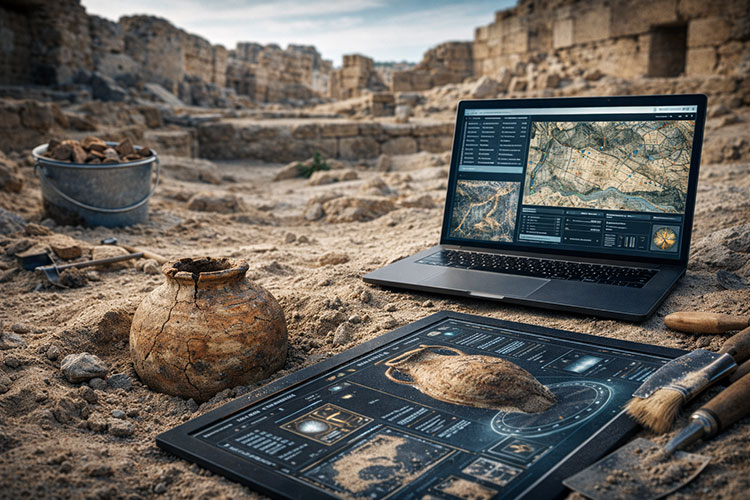
The first step in archaeological research involves careful documentation of artifacts and excavation contexts. Researchers record information about the location, stratigraphy, and physical characteristics of each object.
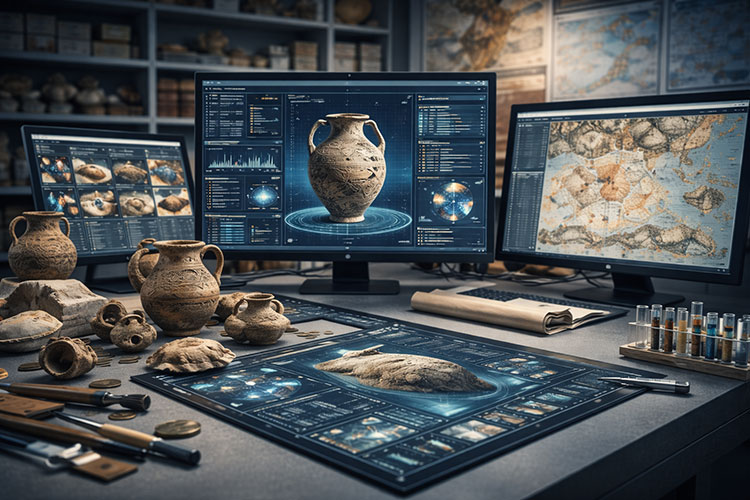
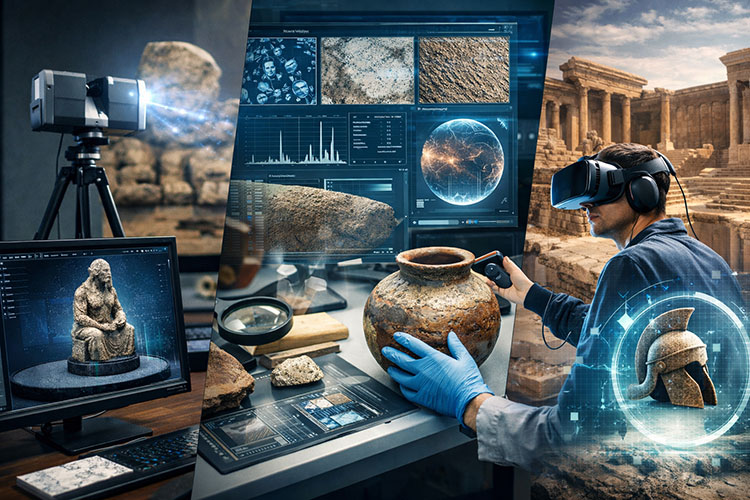
Today, digital tools play a major role in this process. High-resolution photography, 3D scanning, and GIS technologies allow researchers to capture detailed spatial and visual information.
Data Analysis and Interpretation
Once data is collected, researchers analyze it using both traditional and digital methods. Computational tools can help identify patterns, relationships, and distribution trends among artifacts.
For example, statistical analysis and GIS mapping can reveal trade routes, settlement patterns, and cultural exchanges between regions.
Digital Databases and Research Networks
Modern research projects increasingly rely on digital databases that store large collections of archaeological data. These databases allow researchers to compare findings across multiple sites and historical periods.
Digital research networks also facilitate international collaboration, enabling experts from different countries to contribute to shared projects.
Conclusion
Transforming archaeological artifacts into digital knowledge allows researchers to explore the past in new and innovative ways. Through digital documentation, data analysis, and collaborative research platforms, projects like CulTech contribute to a deeper and more accessible understanding of cultural heritage.