
Introduction
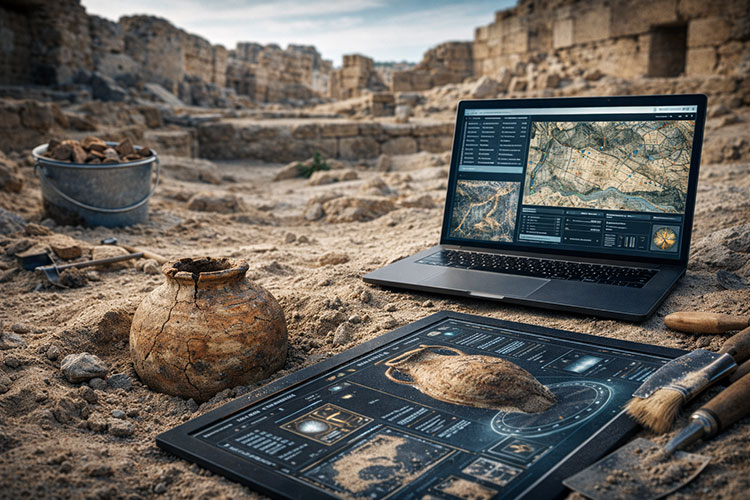
Over the past two decades, digital technologies have significantly transformed the way cultural heritage is studied, documented, and shared with the public. From archaeological excavations to museum collections and historical archives, advanced technological tools now allow researchers to investigate the past with unprecedented precision. Projects such as CulTech demonstrate how interdisciplinary collaboration between historians, archaeologists, chemists, computer scientists, and data specialists can lead to innovative approaches in cultural heritage research.
Digital technologies not only enhance scientific analysis but also improve accessibility, allowing cultural heritage to reach broader audiences across the world.
Digital Documentation and 3D Modeling
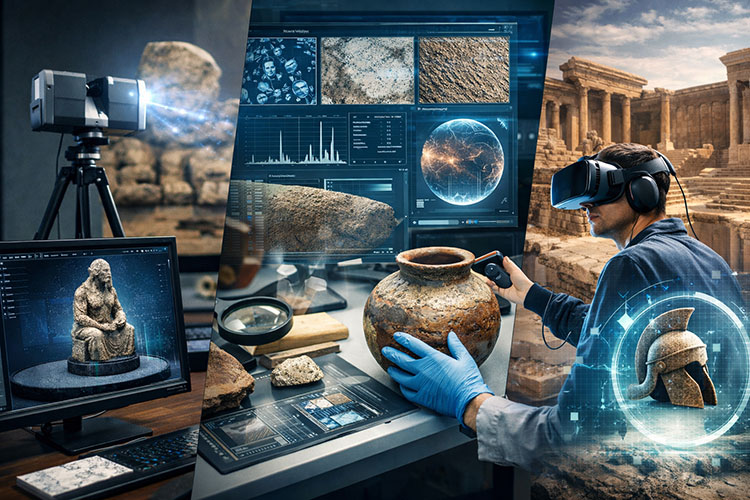
One of the most impactful developments in cultural heritage research is the use of 3D scanning and digital modeling. These technologies enable researchers to create highly accurate digital replicas of artifacts, monuments, and archaeological sites.
Through techniques such as:
- laser scanning
- photogrammetry
- structured light scanning
researchers can capture extremely detailed surface data. These digital models serve multiple purposes:
- documentation and preservation
- scientific analysis
- digital reconstruction of damaged objects
- virtual exhibitions and educational platforms
For fragile artifacts, digital replicas provide a safe alternative to physical handling, ensuring long-term preservation while allowing scholars worldwide to study the objects.
Scientific Analysis and Advanced Materials Research
Modern cultural heritage research often combines traditional archaeology with advanced scientific methods. Analytical techniques such as spectroscopy, microscopy, and chemical analysis help researchers understand the composition and degradation processes of historical materials.
For example, researchers can determine:
- the chemical composition of pigments in ancient artworks
- the corrosion processes affecting metallic artifacts
- the manufacturing techniques used by ancient craftsmen
These insights provide valuable information about historical technologies, trade networks, and cultural interactions between ancient societies.
Within projects like CulTech, interdisciplinary laboratories contribute to the development of innovative methods for material characterization and conservation strategies.
Digital Humanities and Cultural Data
Another important development is the emergence of digital humanities, a research field that integrates computational tools with humanities scholarship.
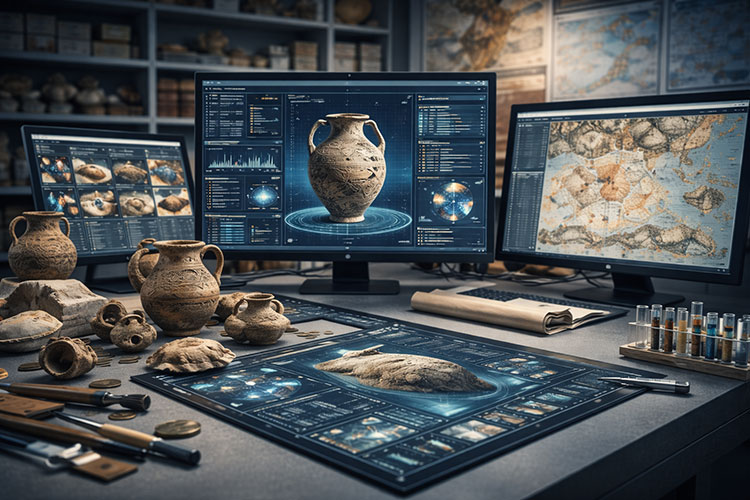
Digital databases, digital archives, and semantic data models allow researchers to organize and analyze large collections of historical information. By combining archaeological data, historical records, and spatial information, researchers can uncover patterns that would otherwise remain invisible.
For example, digital platforms can integrate:
- archaeological site data
- artifact catalogues
- historical texts
- geographic information systems (GIS)
This integration allows researchers to reconstruct historical landscapes, trade routes, and cultural networks across large geographical regions.
Public Engagement and Virtual Access
Digital technologies also play a key role in making cultural heritage more accessible to the public. Virtual museums, interactive exhibitions, and online archives allow people to explore historical artifacts from anywhere in the world.
Through virtual reality (VR) and augmented reality (AR), visitors can experience reconstructed ancient environments, explore archaeological sites, or interact with digital artifacts in immersive ways.
These technologies support educational initiatives and promote public awareness of cultural heritage preservation.
Conclusion
Digital technologies are reshaping cultural heritage research by combining scientific analysis, digital documentation, and open access to knowledge. Projects like CulTech demonstrate the value of interdisciplinary collaboration and technological innovation in preserving and understanding our shared cultural heritage.
As technology continues to evolve, digital tools will play an increasingly important role in both scientific research and public engagement with the past.