
Introduction
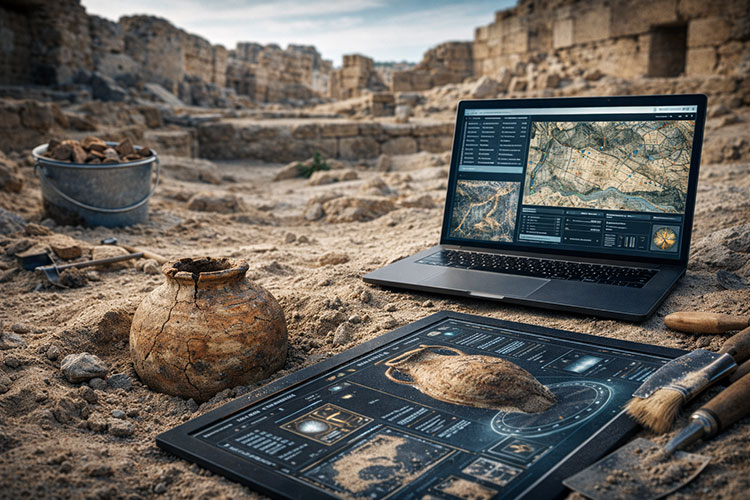
Understanding cultural heritage requires expertise from many different disciplines. Archaeologists uncover artifacts and sites, historians interpret historical contexts, chemists analyze material composition, and computer scientists develop digital tools for data analysis and visualization.
Interdisciplinary collaboration allows researchers to build a more complete understanding of past societies and the objects they created.
The Complexity of Cultural Heritage
Cultural heritage objects are complex materials shaped by historical processes, environmental conditions, and human activity. A single artifact may require analysis from several scientific perspectives.
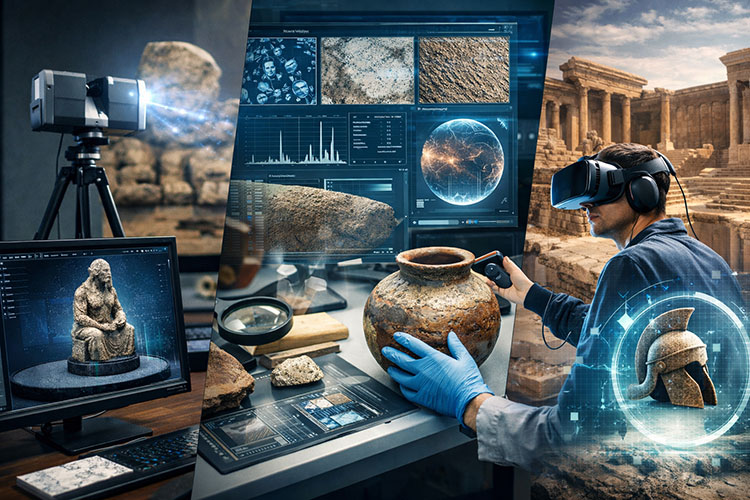
For example, studying an ancient ceramic vessel may involve:
- archaeological context analysis
- chemical composition studies
- microscopic examination of materials
- historical interpretation of manufacturing techniques
By combining these perspectives, researchers can reconstruct the technological knowledge and cultural practices of ancient societies.
Collaboration Between Sciences and Humanities
In recent years, the collaboration between natural sciences and humanities has become increasingly important in heritage research.
Scientific methods such as:
- spectroscopy
- isotope analysis
- radiocarbon dating
provide objective data about the age, origin, and composition of artifacts.
At the same time, historians and archaeologists interpret these findings within broader cultural and historical frameworks.
This integration creates a more comprehensive understanding of the past.
Digital Infrastructure for Research
Large interdisciplinary projects require efficient systems for managing and sharing research data. Digital infrastructure allows researchers to collaborate across institutions and countries.
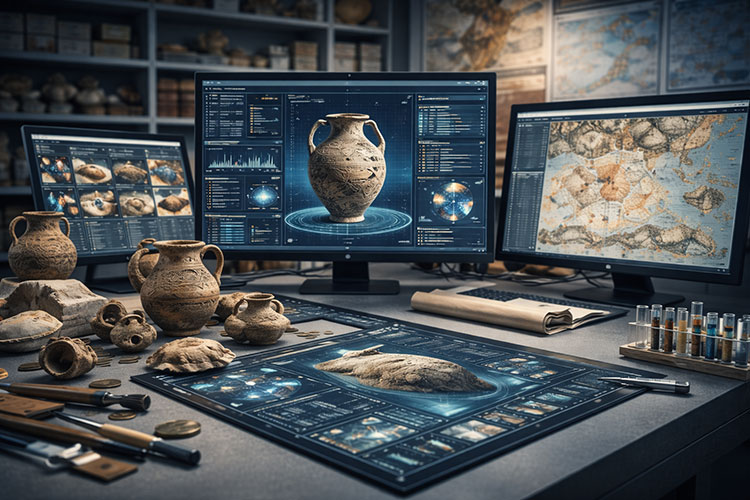
Digital research platforms support:
- shared databases
- collaborative data analysis
- digital repositories
- visualization tools
Such platforms also facilitate open science initiatives, making research results accessible to both scholars and the public.
Conclusion
Interdisciplinary collaboration is essential for advancing cultural heritage research. By combining expertise from multiple fields, researchers can uncover new insights into historical technologies, social structures, and cultural interactions.
Projects like CulTech illustrate how interdisciplinary research can lead to innovative methodologies and a deeper understanding of human history.